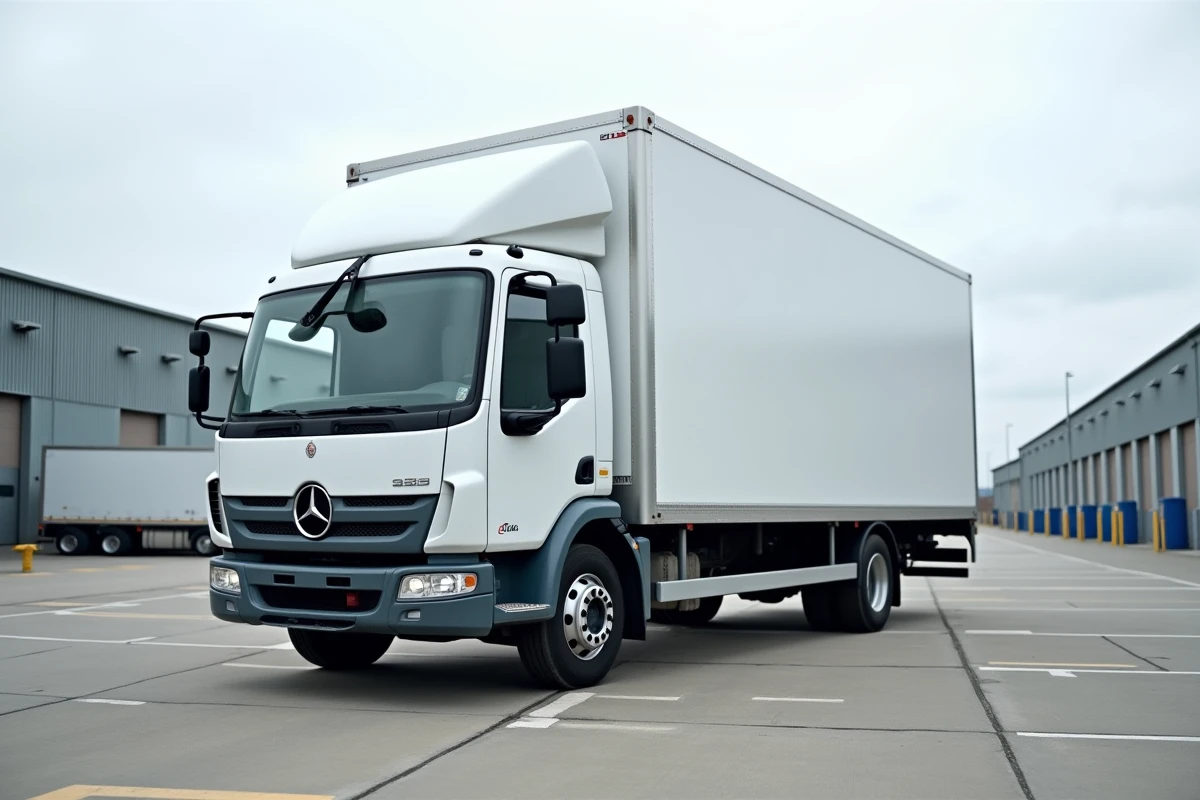
The 3.5-ton truck occupies a unique place in the utility vehicle market: it is the heaviest vehicle accessible with a B license. This weight limit, set at exactly 3,500 kg, conditions everything else, from the choice of body type to the actually usable payload.
GVW and actual payload: the constraint that technical sheets hide
The key figure for a 3.5-ton vehicle is not the box volume, but the net payload after deducting the empty weight. A large volume van with a double cab, air conditioning, and a tail lift can have an empty weight significantly exceeding 2,200 kg. This leaves barely over a ton of payload, which severely limits its use for transporting dense materials.
We regularly observe a gap of several hundred kilos between two vehicles of the same GVW, depending on the level of equipment and the type of body. A bare chassis-cab with drop sides maintains a significantly higher payload than that of a fully enclosed insulated van. To explore this point further, a detailed guide on the 3.5-ton truck and its characteristics allows for comparison of common configurations.
The distinction is based on GVW and not on empty weight. From 3,501 kg GVW, a C license becomes mandatory. Some manufacturers intentionally offer versions at 3,490 kg GVW to maintain eligibility for a B license, even if it means reducing the payload.

Diesel engines and electric transition in the 3.5-ton segment
Diesel remains the dominant engine type in this segment. The four-cylinder turbo engines typically develop a power output ranging from 130 to 170 hp, paired with a six-speed manual gearbox or an automated transmission. The torque available from low revs remains the main selling point for construction and delivery jobs.
The electrification of the 3.5-ton segment is progressing rapidly. Several manufacturers now market electric versions of their light chassis, with ranges suited for urban and suburban routes. The FUSO eCanter, for example, exists in a 4.25-ton version but illustrates the trend moving down to the 3.5-ton range.
The calculation of the total cost of ownership (TCO) for an electric vehicle in this category changes the game for urban fleets: the absence of fuel costs and reduced maintenance partially offset a higher acquisition price. The question of the manufacturer’s warranty on the battery and powertrain becomes a selection criterion as crucial as power output.
Body types suitable for the 3.5-ton truck
The choice of body type determines the actual use of the vehicle. Three configurations cover the majority of professional needs:
- Large volume van: closed box of approximately 15 to 22 m3, suitable for parcel delivery and moving. The interior height often allows for standing work
- Chassis-cab with tipping body: preferred solution on construction sites for transporting rubble, earth, or bulk materials. The hydraulic system allows for rear or three-way unloading depending on the models
- Drop-side platform with or without tarpaulin: versatile for transporting pallets, agricultural equipment, or bulky items. The foldable sides facilitate lateral loading
Other configurations exist (refrigerated box, equipment transport platform, insulated box), but they remain specialized variations of these three basic architectures.
Single cab or double cab
The single cab is sufficient for a driver and one passenger. The double cab accommodates up to six or seven people depending on the models, making it suitable for construction teams. The trade-off is direct: each additional seat reduces the available box length and increases the empty weight.
Emission standards and regulatory constraints to anticipate
The vehicles currently on the market comply with Euro 6 standards, which impose strict limits on NOx and fine particle emissions. The post-treatment system (particulate filter, AdBlue injection) adds a recurring maintenance item that should not be overlooked in the operating budget.
The Euro 7 standard, currently being rolled out at the European level, will strengthen these requirements. NOx and particulate emission thresholds will be significantly reduced in the coming years, which will directly impact the acquisition cost of thermal engines and could accelerate the shift to electric for urban uses.
Low emission zones (LEZ) represent another regulatory parameter to consider. A 3.5-ton vehicle classified as Crit’Air 2 or higher can still operate in most urban areas, but restrictions are tightening year after year. We recommend checking the Crit’Air classification before any investment, especially for fleets dedicated to last-mile delivery.
Selection criteria for purchase or long-term rental
The choice of a 3.5-ton vehicle relies on a few concrete trade-offs:
- Necessary payload compared to box volume: a mover does not have the same constraints as a mason
- Expected annual mileage: beyond intensive use, diesel retains the cost advantage per kilometer over electric, except in pure urban areas
- Duration of ownership and residual value: models from Iveco, MAN, or FUSO Canter maintain a variable value depending on the engine type and the condition of the powertrain
- Maintenance network and availability of parts: a vehicle out of service costs more than a preventive maintenance check
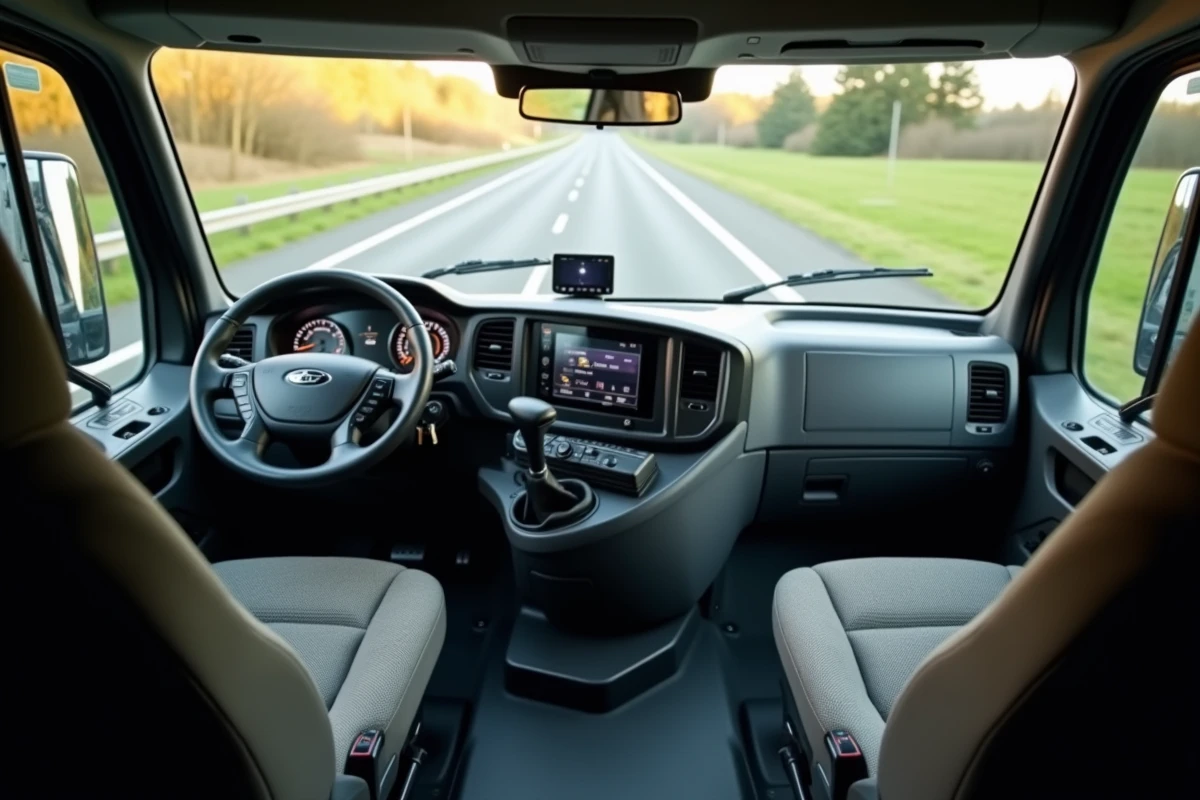
The driver’s seat and the ergonomics of the driving position (adjustable steering wheel, visibility, turning radius) deserve an extended trial before any decision. On delivery routes with dozens of stops per day, driver comfort directly impacts productivity and safety.
The 3.5-ton segment remains the balance point between transport capacity and regulatory accessibility. Regulatory changes and the arrival of credible electric engines are gradually reshaping the offering, but the criterion of net payload remains the primary selection filter for any professional.