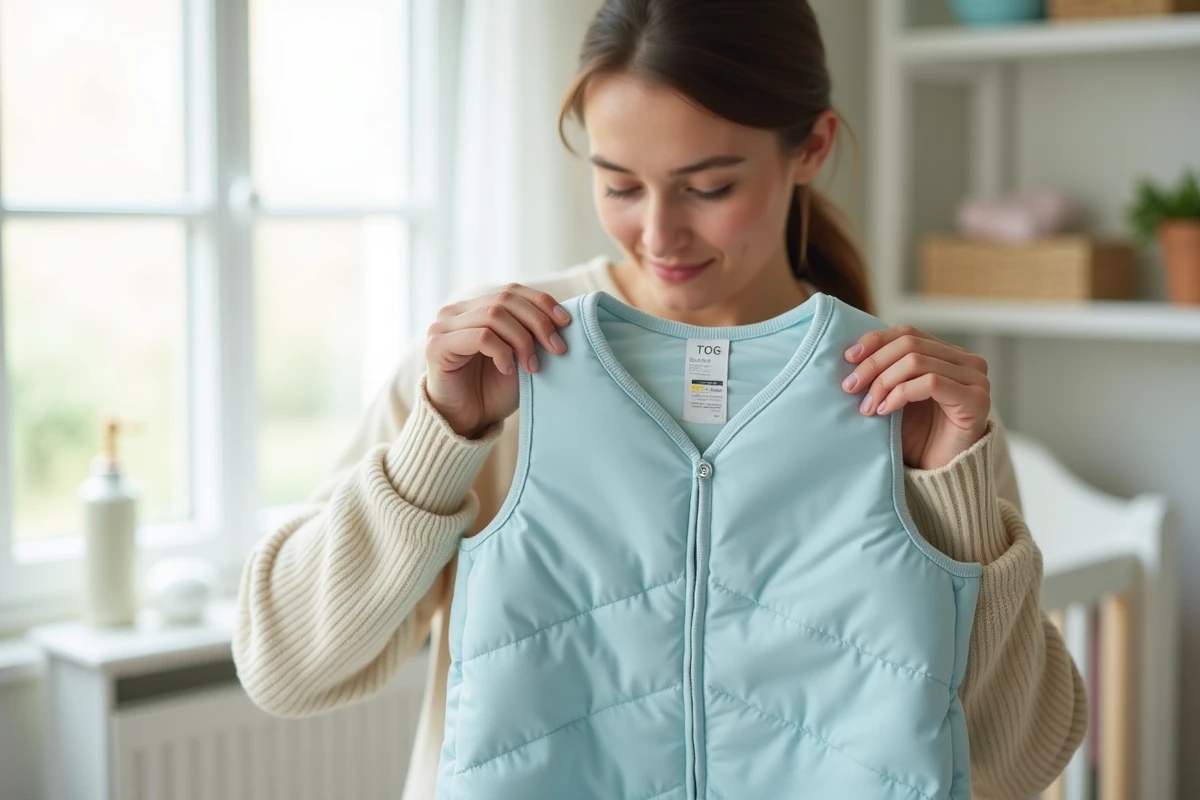
The sleeping bag, or swaddle, is a sleeping bag designed to replace any blanket in an infant’s crib. Its primary role is thermal: to maintain a stable body temperature without the risk of covering the face. Choosing a baby sleeping bag online requires reading technical information that product sheets do not always highlight, starting with the TOG rating and the actual textile composition.
REACH Compliance and Chemicals: What the Product Sheet Should Mention
Since 2022-2023, the European regulation REACH has received increased attention for textiles intended for infants. ANSES and ECHA have issued alerts regarding the presence of per- and polyfluoroalkyl substances (PFAS) in water-repellent and stain-resistant treatments applied to children’s fabrics.
Specifically, a quality sleeping bag sold online should indicate the absence of PFAS and endocrine disruptors in its description. If the product sheet merely states “compliant with European standards” without specifying which ones, caution is warranted. A reliable seller details the standard (REACH, Oeko-Tex Standard 100, GOTS for organic cotton) and the testing laboratory.
To delve deeper into the issue of reliable online stores, you can learn more on 1 maman blogueuse, which lists several brands offering sleeping bags with textile traceability.
TOG Rating of Sleeping Bags: Read the Number and Adapt to Room Temperature
The TOG measures the thermal resistance of the fabric. The higher the value, the more heat the sleeping bag retains. Most brands offer three levels, but the number alone is not enough: it must be cross-referenced with the actual temperature of the baby’s room.
- TOG 0.5: suitable for warm nights when the room exceeds 24-25 °C. The fabric is thin, often a simple layer of cotton or muslin.
- TOG 1 to 2: the most versatile range, for rooms between 18 and 22 °C, which is the range recommended by pediatricians for infant sleep.
- TOG 2.5 and above: reserved for cool rooms, below 18 °C. A TOG 3 exists in some brands, but it is rarely necessary in a properly insulated home.
The TOG does not replace a room thermometer. Checking the baby’s neck (neither sweaty nor cold) remains the most reliable test to confirm that the TOG choice is correct. Signs such as sweating on the scalp or cold extremities indicate poor thermal adjustment.
Adjusting Clothing Under the Sleeping Bag
A long-sleeved bodysuit under a TOG 2 sleeping bag in a 20 °C room is a classic combination. In summer, a simple sleeveless bodysuit or a lightweight pajama is sufficient under a TOG 0.5. A common mistake is to layer too many clothes as a precaution, which can lead to overheating more dangerous than mild cold.
Zipper and Durability: The Criterion Revealed by Customer Reviews
Analysis of consumer reviews on certified platforms shows a significant increase in negative comments regarding the durability of the zipper. Jamming after a few months of use, tabs breaking, zippers opening by themselves at night: these feedbacks frequently recur and affect all price ranges.
Two points to check on the product sheet before ordering:
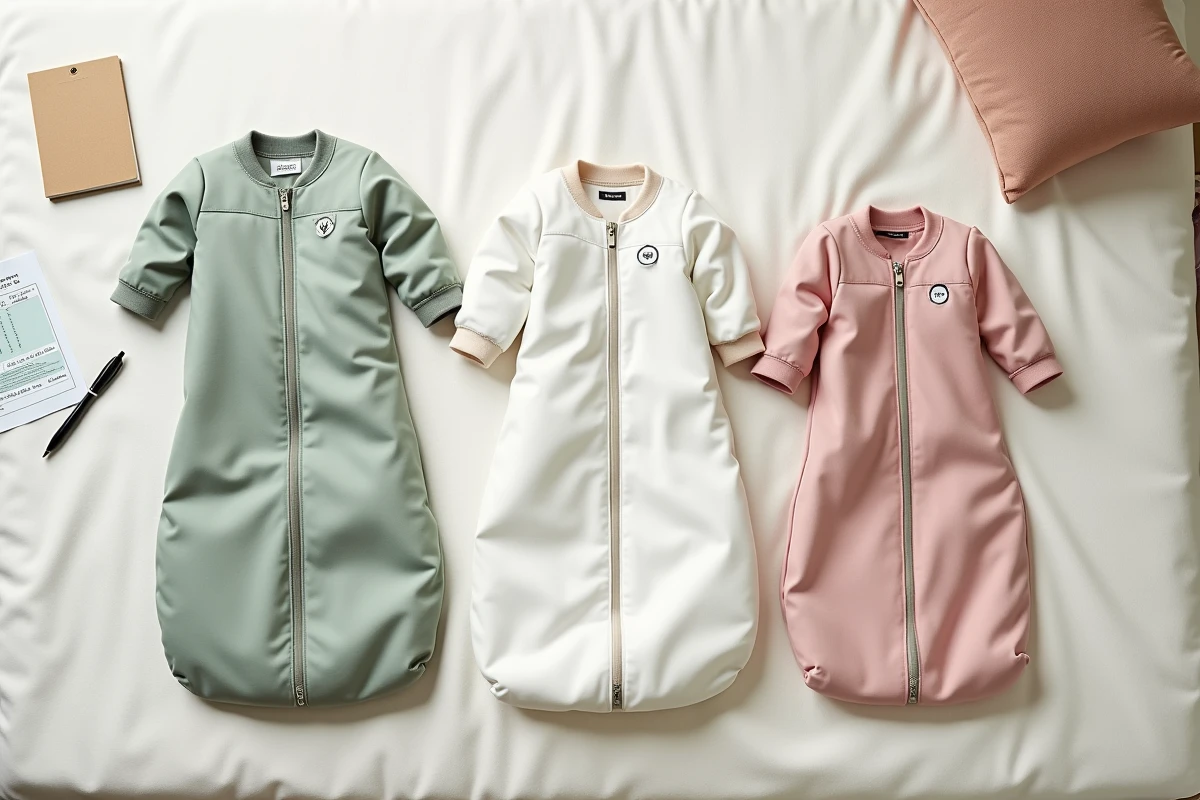
The opening direction, first. A zipper that opens from the bottom facilitates nighttime changes without exposing the baby’s torso. Models with double sliders (top and bottom) offer the best flexibility.
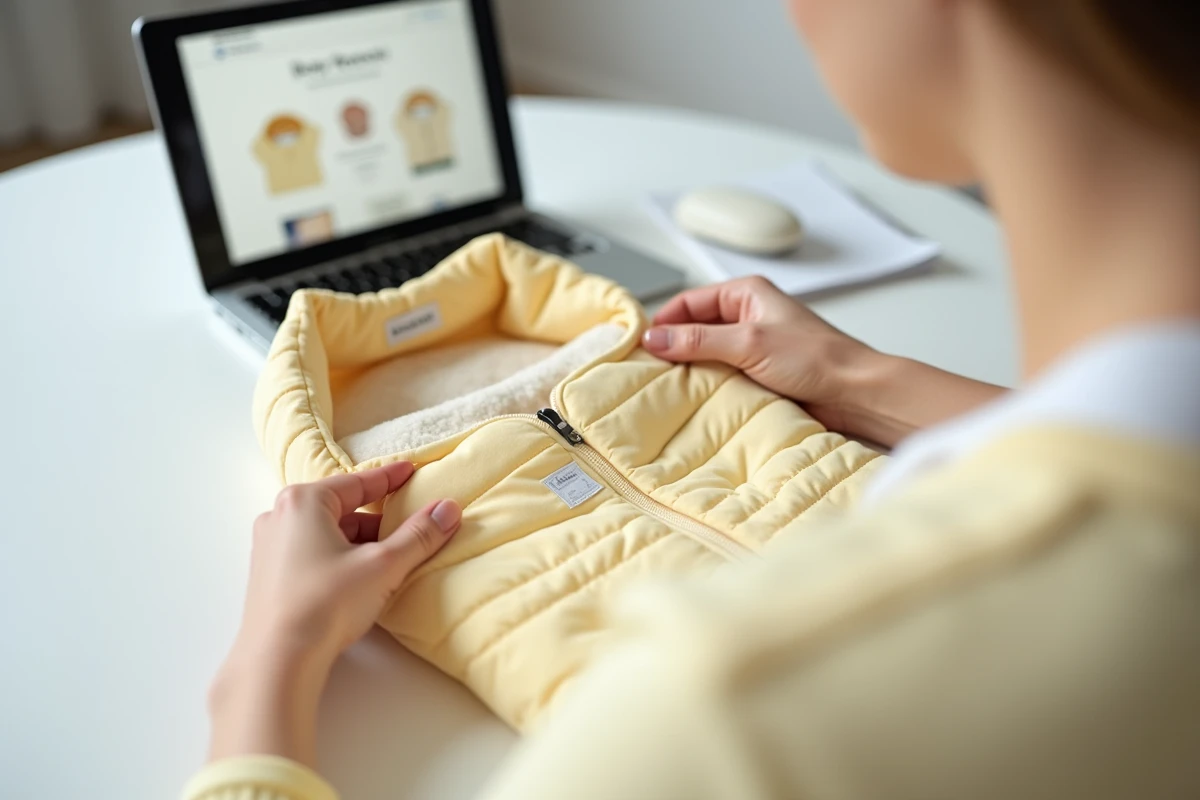
The presence of a zipper cover next. This fabric flap protects the skin of the chin and neck from metal friction. In online photos, zoom in on this area: a well-designed zipper cover fully covers the slider up to the top.
Pilling and Shape Stability
The other recurring issue in reviews concerns the rapid pilling of the fabric and the twisting of the sleeping bag around the neck during the night. A sleeping bag that turns indicates a problem with armholes that are too wide for the baby’s size. For sizing, it is better to rely on the shoulder-to-foot length of the infant rather than their age, as age-to-size correspondences vary greatly from brand to brand.
Sleeping Bag Size and Online Purchase: Avoiding the Wrong Choice
Standard sizes generally come in three ranges (birth, 6 months, 18 months), but the cuts differ by manufacturer. Measuring the baby from shoulder to feet and adding a few centimeters provides a more reliable indication than the age-weight chart displayed on the site.
A sleeping bag that is too large allows the infant to slide inside, posing a risk of covering the face. A sleeping bag that is too short compresses the legs and hinders free movement during sleep. The right size allows the baby to bend their knees without the fabric pulling on the shoulders.
Sleeping Bag with or without Sleeves
Models with removable sleeves are gaining popularity because they adapt to temperature variations. In practice, the sleeveless sleeping bag remains the recommended standard: it allows excess heat to escape through the arms and limits overheating. Sleeves are mainly justified in homes where the room regularly drops below 16 °C.
The safety of a sleeping bag depends as much on its fabric as on its sizing. Before finalizing an online cart, cross-reference the TOG with the room temperature, check the REACH compliance on the sheet, and read reviews focused on the zipper to eliminate most unpleasant surprises.