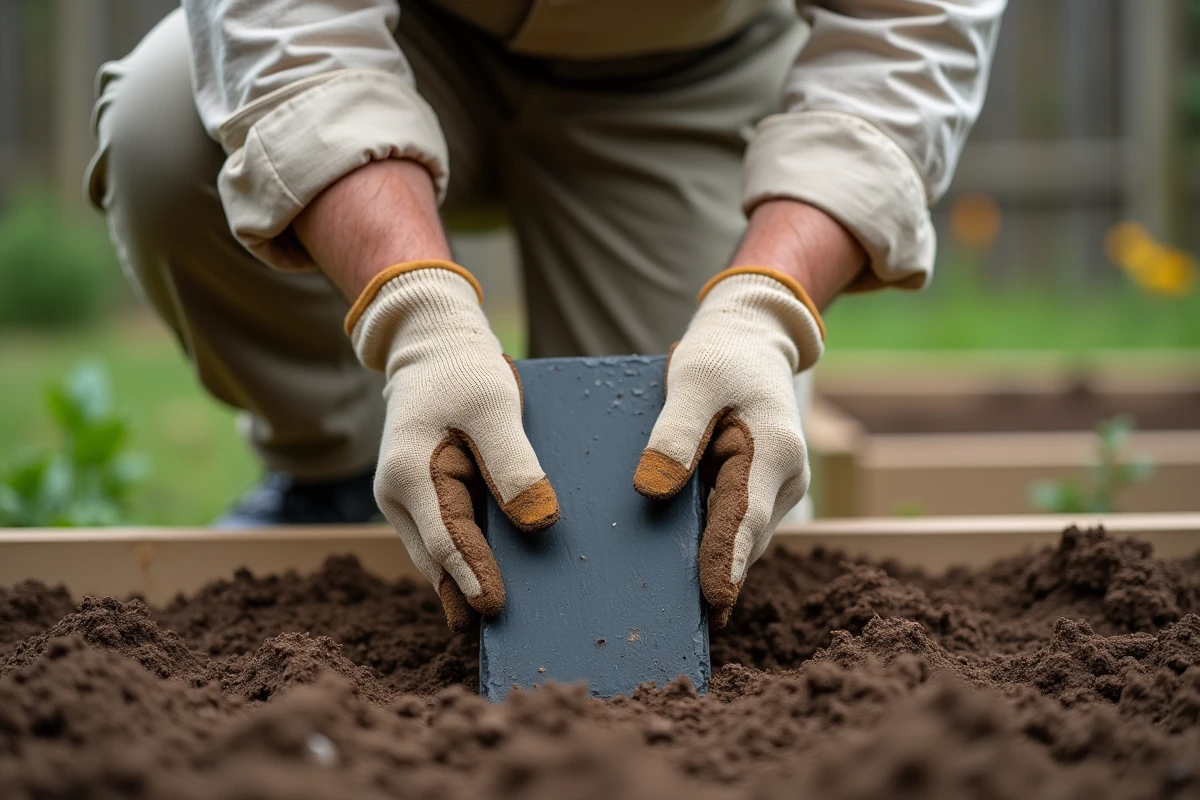
Installing schist stakes in a garden may seem simple, but the longevity of the installation depends on details that are no longer visible once the work is completed: the type of bedding, the thickness of the anchoring, and the soil’s behavior against frost. This article compares the methods of leveling and drainage to identify those that truly stand the test of time.
Leveling schist stakes: classic concrete, draining concrete, or gravel bed
The choice of leveling material directly affects resistance to frost heave. The French Federation of Landscape (FFP), in its technical recommendations revised in 2024, now advises using a draining bed or draining concrete rather than classic concrete to limit cracks and tilting over three to five years.
| Leveling Method | Drainage | Frost Risk | Installation Difficulty | Possible Recovery |
|---|---|---|---|---|
| Classic concrete (standard mix) | None | High in clayey or wet soil | Medium | Very difficult (destruction necessary) |
| Draining concrete | Good | Low | Medium to high (specific mix) | Difficult |
| Compacted gravel or all-in bed | Excellent | Very low | Low | Easy (stake removable) |
In well-drained soil and in regions with mild winters, classic concrete remains functional. However, in areas with wet and unstable winters, feedback from landscape professionals indicates a notable increase in frost-related damage on stakes set without a draining layer. Tilting often occurs after two or three successive freeze-thaw cycles.
Those considering reorganizing their layout in a few years should opt for a gravel bed: the stake remains removable without breaking the soil. Learning how to install schist stakes on La P’tite Graine allows for visualizing different configurations before starting.

Anchoring depth and visible height: the ratio to respect
The basic rule shared by most professional landscapers is based on a simple ratio: one third of the total length of the stake must be buried. A schist stake with a total length exceeding one meter therefore requires an anchoring of at least thirty centimeters below ground level.
This ratio ensures lateral stability, especially when stakes are placed in tight alignment to form a privacy screen or decorative fence. If the soil is loose or sandy, slightly increasing the anchoring depth compensates for the lack of natural cohesion in the ground.
Preparing the trench
The trench should be slightly wider than the thickness of the stake to allow for lateral leveling. A flat, leveled bottom prevents stakes from tilting unevenly. Placing a geotextile fabric at the bottom of the trench prevents fine clay from rising into the draining layer, preserving drainage capacity over time.
- Excavate to a depth equal to one third of the stake, plus five centimeters for the draining bed.
- Unroll the geotextile, slightly extending it up the side walls of the trench.
- Pour and compact the gravel in successive layers of a few centimeters, checking the level with each pass.
- Position the stake, level with fine gravel or all-in, then firmly pack around it.
Locally sourced or imported schist: how provenance makes a difference
Since 2024, several French quarries and merchants have been promoting stakes certified “origin France” or “local stone.” The UNPG (National Union of Aggregate Producers) and the National Syndicate of Ornamental Rocks report a growing demand for landscape materials with a low carbon footprint.
This trend is not solely ecological. Local schist is often extracted from Breton, Angevine, or Ardennes quarries, whose geological characteristics differ significantly from Spanish or Portuguese schists. Breton schist tends to have tighter layering, while some Iberian schists offer more varied hues but sometimes slightly higher porosity.
Impact on garden durability
A more porous schist absorbs more water. During freezing periods, this trapped water in the rock causes micro-cracking on the surface. Over several years, the layering degrades faster on poorly drained porous schist. Checking the apparent density of the stake (a heavy stake for its size is generally less porous) is a simple indicator before purchase.
Common installation mistakes on clay soil
Clay soil concentrates the majority of problems encountered after installation. Clay retains water and swells, then shrinks during dry periods. This cyclical movement exerts lateral pressure on the stakes, which eventually detach from their leveling.
Two precautions significantly reduce this risk:
- Widen the trench and replace the excavated clay with gravel throughout the anchoring depth, creating a draining “cradle” around the stake.
- Avoid installing stakes during water-saturated soil periods (late autumn, rainy winter): the compaction of the draining bed will be poor, and the ground will deform during the subsequent drying.
- Check the plumb of each stake after a few weeks, especially after the first heavy rains, and re-level if necessary before the soil stabilizes permanently.
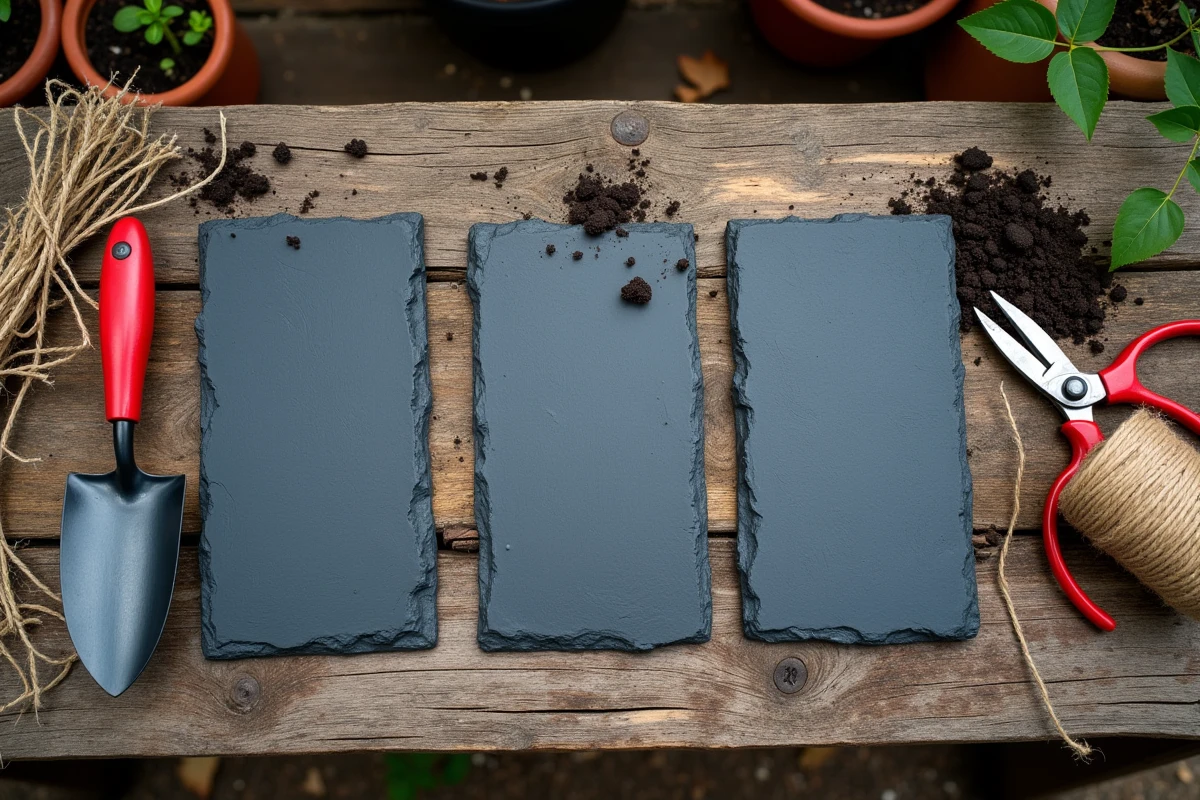
Accessibility constraints also play a practical role that is often underestimated. A large schist stake can weigh several dozen kilos. Planning the access route and handling before ordering avoids having to maneuver heavy pieces in narrow passages.
The success of installing schist stakes relies less on the action itself than on soil preparation and drainage choice. A well-compacted gravel bed on geotextile, an anchoring at one third of the height, and schist suited to the local climate form the foundation of a layout that will not shift.