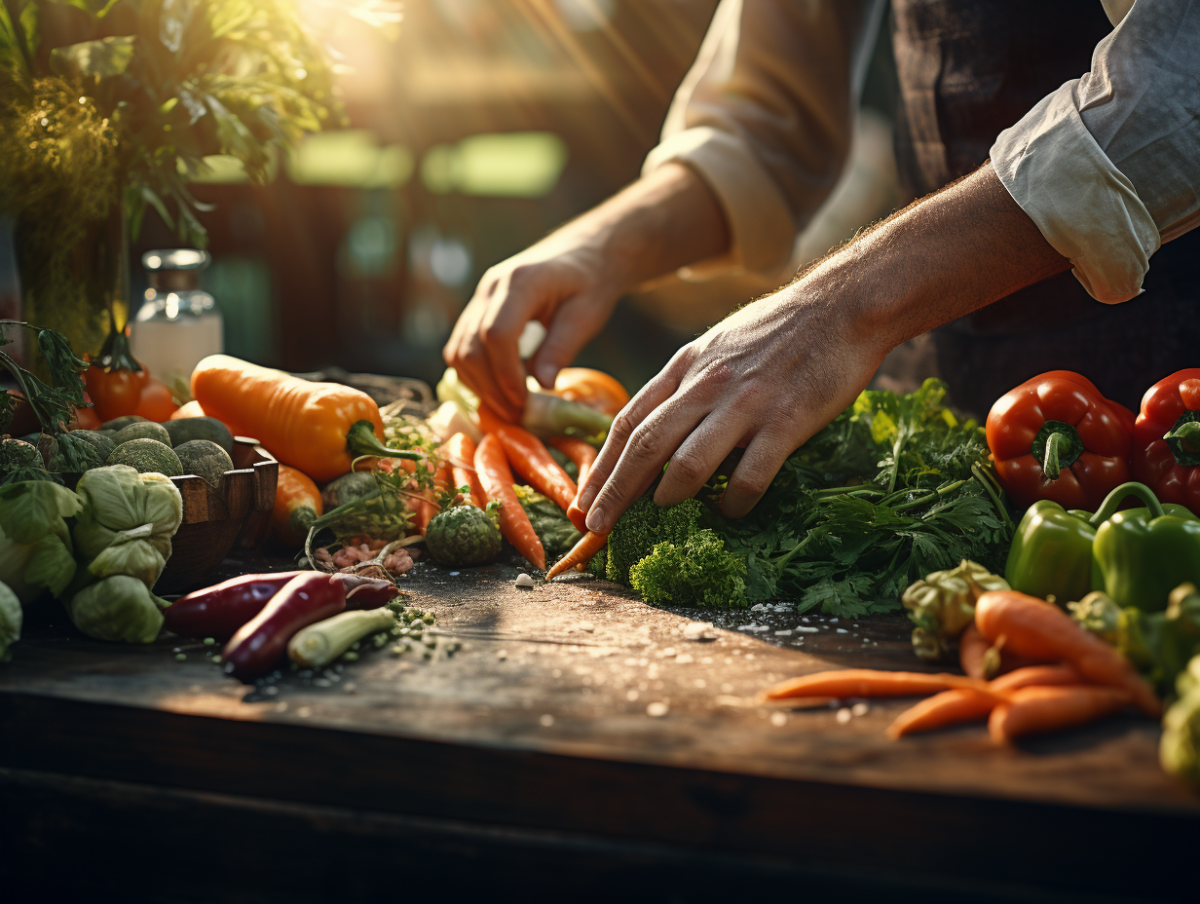
In the kitchen, mastering the cutting of vegetables is essential for the aesthetics of dishes and even cooking. The julienne technique, which involves cutting vegetables into fine, uniform matchsticks, is particularly valued for its finesse and ability to harmoniously integrate flavors. To execute it accurately, one must know the proper techniques and be equipped with the right tools. This involves using a sharp knife and practicing a specific method that gives vegetables an attractive shape while preserving their nutritional qualities.
Mastering the art of julienne cutting: techniques and tips
Learn to cut your vegetables into julienne like a chef involves both technique and patience. Julienne, this fine matchstick cut, transforms celeriac, carrots, turnips, leeks, or zucchini into delicate components, perfect for enriching a consommé or enhancing a waterzoï. By mastering cutting techniques, you bring a touch of sophistication and even cooking to your dishes.
To start, wash and peel your vegetables. Then, on a stable cutting board, slice them to the desired thickness before taking them in hand to cut them into fine sticks. Consistency is key: each julienne should measure about 2 to 3 mm wide and 4 to 5 cm long. This uniformity ensures not only visual appeal but also even cooking of each piece.
The choice of knife is crucial: opt for a sharp stainless steel blade, well-honed to ensure a clean and precise cut. Handling the knife requires technique and concentration. Hold the vegetable firmly with one hand, and with the other, practice controlled back-and-forth movements, guiding the blade with the knuckles of your fingers, spread apart to avoid cutting them.
For cooks seeking increased efficiency, the mandoline presents an interesting alternative. It allows for quick, uniform slices that can then be transformed into julienne. Professional vegetable cutters offer a solution for large quantities, reducing preparation time while preserving the quality of the cut. Regardless of the tool chosen, regular practice will refine your technique and enhance your culinary skills.
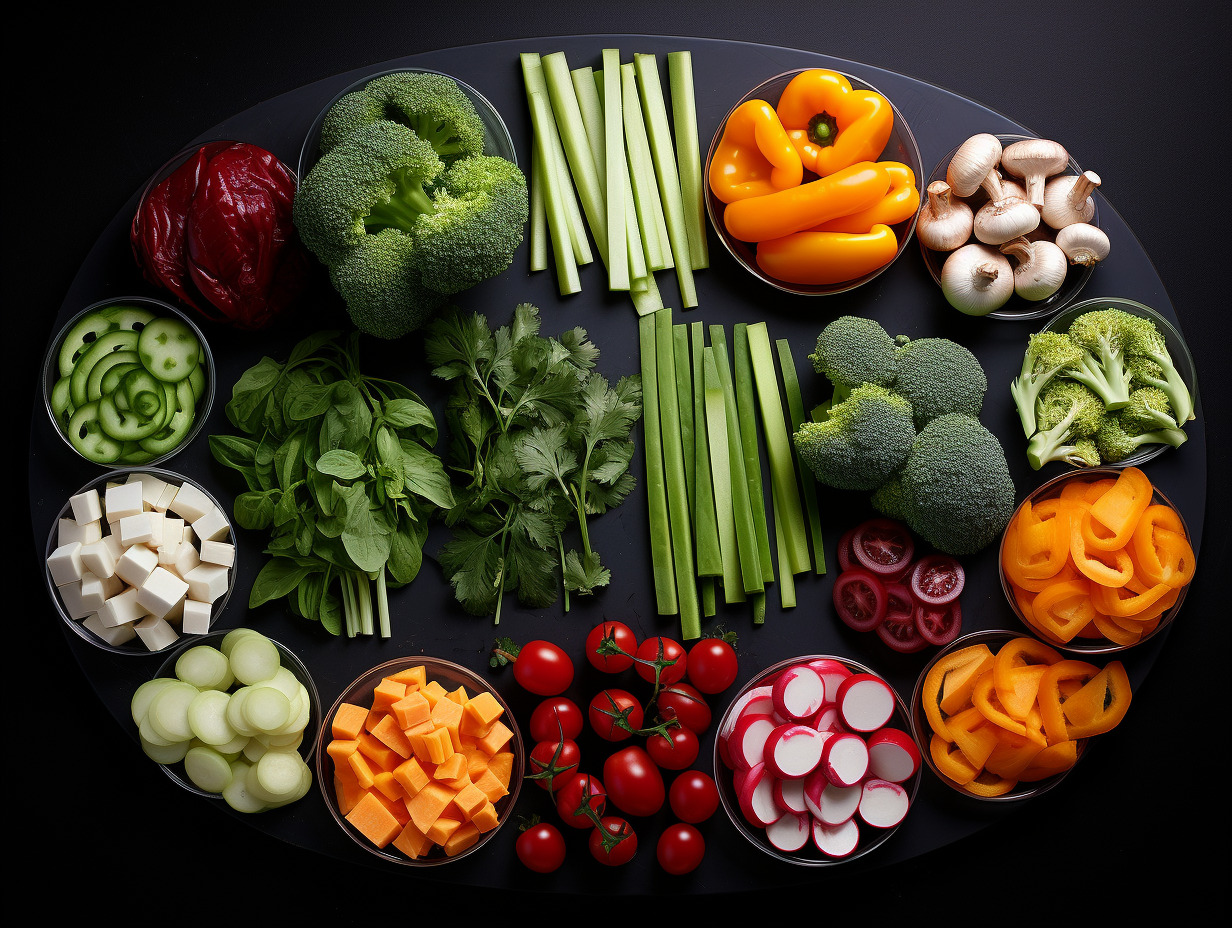
Choosing and using the right tools for a perfect julienne
The arsenal of the perfect juliennist undoubtedly begins with the choice of an appropriate knife. This kitchen tool, whose precision shapes the success of the technique, should have a stainless steel blade, a guarantee of durability and sharpness. A chef’s knife, with its wide and stable blade, allows for a regular and controlled cut of vegetables. It is important to ensure that the utensil is always well-sharpened to facilitate cutting and prevent any crushing of the vegetable’s flesh.
The mandoline, this precision companion, proves to be essential for those who wish to standardize their cuts without sacrificing speed. With its various adjustable blades, it allows for uniform thickness slices that can then be easily transformed into julienne. This instrument should be used with caution, employing the finger guard provided to avoid any accidents.
For professionals or enthusiasts dealing with large quantities, the professional vegetable cutter is an effective solution. Significantly reducing preparation time, this equipment allows for the quick and methodical processing of large amounts of vegetables while maintaining the quality and finesse of the cut. Whether preparing a consommé or enriching a waterzoï, using these tools, combined with sharp technique, ensures a refined presentation and perfectly even cooking.