
The ultra-trail and extreme endurance disciplines are no longer just about the kilometers covered in the mountains. The term “ultra sport” today encompasses an ecosystem where logistics, environmental regulations, and anti-doping policies are transforming both the races and the training of athletes. Here are the recent developments that are reshaping this landscape.
Mobility and Decarbonization: The New Playground for Ultra-Trail Organizers
For a long time, the ecological debate surrounding major races focused on aid stations and race waste. This perspective has shifted. The mobility of runners and their supporters has become the primary lever for decarbonization identified by organizers.
The UTMB Group renewed its partnership with Transdev on October 2, 2026, with a system of over 150 vehicles aimed at limiting individual car use during race week. This type of collaboration marks an operational turning point: organizers are no longer just sorting cups; they are managing transport plans at the scale of an entire valley.
The news published on Ultra Sport regularly highlights these logistical developments, which concern both volunteers and the increasing number of spectators.
Environmental Regulations in Racing: From Voluntary to Mandatory
A structural change is taking place in the management of events organized in protected natural areas. During the Ultra-Trail Mount Yun by UTMB and other competitions in sensitive zones, environmental measures have shifted from mere encouragement to race regulations.
Specifically, several obligations now apply to runners and organizations:
- Elimination of plastic tableware at aid stations, replaced by reusable or compostable containers
- Mandatory transport of waste by each runner to designated collection points, under penalty of fines
- Systematic monitoring of the impact on biodiversity before and after the event, with measurable indicators
This integration of biodiversity into operational management goes beyond greenwashing. It forces race directors to rethink their routes, their timing in sensitive areas, and the capacity of each sector.
Local Acceptability of Ultra-Trails: The Chamonix Case
The growing popularity of ultras generates new tensions with local populations. In September 2026, the UTMB publicly responded to criticisms regarding the saturation of the Chamonix valley. The grievances are concrete: nighttime noise, influx of spectators and supporters, pressure on accommodations and road infrastructures.
Local acceptability is becoming a criterion for the sustainability of major races. The organization acknowledged persistent issues of mobility and nuisances while contesting some data put forward by its critics. This debate illustrates a shift: the question is no longer whether an ultra-trail attracts crowds, but whether the territory can absorb this influx without degrading the quality of life for residents.
The issue ties into the quality of the indicators used to measure territorial impact. Organizers, local authorities, and environmental associations do not always rely on the same metrics, complicating the search for compromise.
Mandatory Equipment and Anti-Doping Control: A Stricter Framework
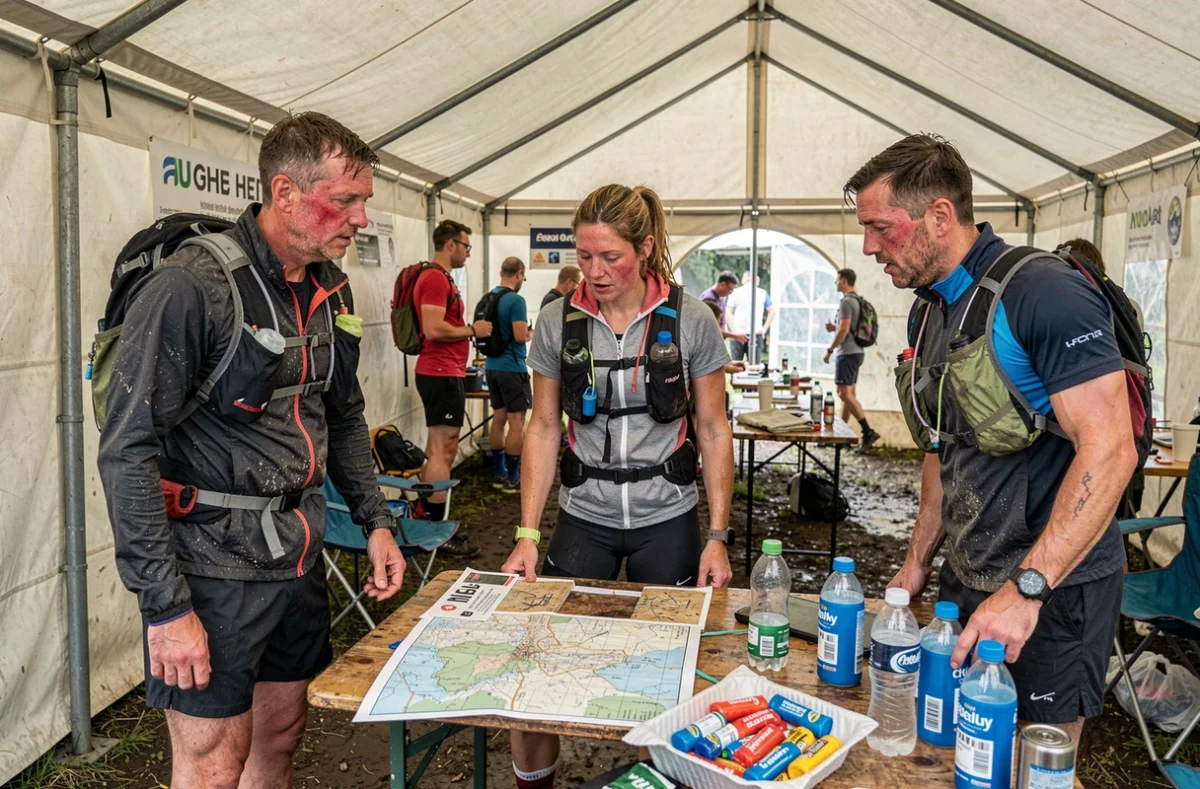
The lists of mandatory equipment for ultra-trails are no longer mere recommendations. Recent regulations from the UTMB Mont-Blanc stipulate equipment that can be adjusted according to weather conditions, with enhanced checks at checkpoints.
This adaptive approach means that a runner may be required to carry an additional layer or an increased water supply during the event, based on updated forecasts. Mandatory equipment becomes a real-time risk management tool, rather than just an administrative checklist checked at the start.
On the anti-doping side, dedicated resources are being structured. UTMB Chattanooga provides runners with specific documentation on banned substances and control procedures. This professionalization of the anti-doping framework in ultra-endurance brings these events closer to the standards applied in Olympic sports.
UTMB Congress 2026: Women’s Health in Ultra-Endurance
The international UTMB congress, scheduled from August 24 to 30, 2026, in Chamonix during race week, focuses on women’s health in ultra-endurance. This theme, promoted by Ultra Sports Science, addresses topics that are still under-documented: hormonal cycles and performance, specific injury risks, postpartum recovery in endurance athletes.
Making the UTMB week an international scientific event represents an ambition that goes beyond the sporting framework. The results of this work will ultimately inform medical recommendations for female runners, an area where data remains scarce.
The 2026 season confirms that the ultra sport universe is professionalizing on all fronts, from transport logistics to medical research. Runners following this schedule are discovering a sport where individual performance increasingly depends on a well-structured collective ecosystem.