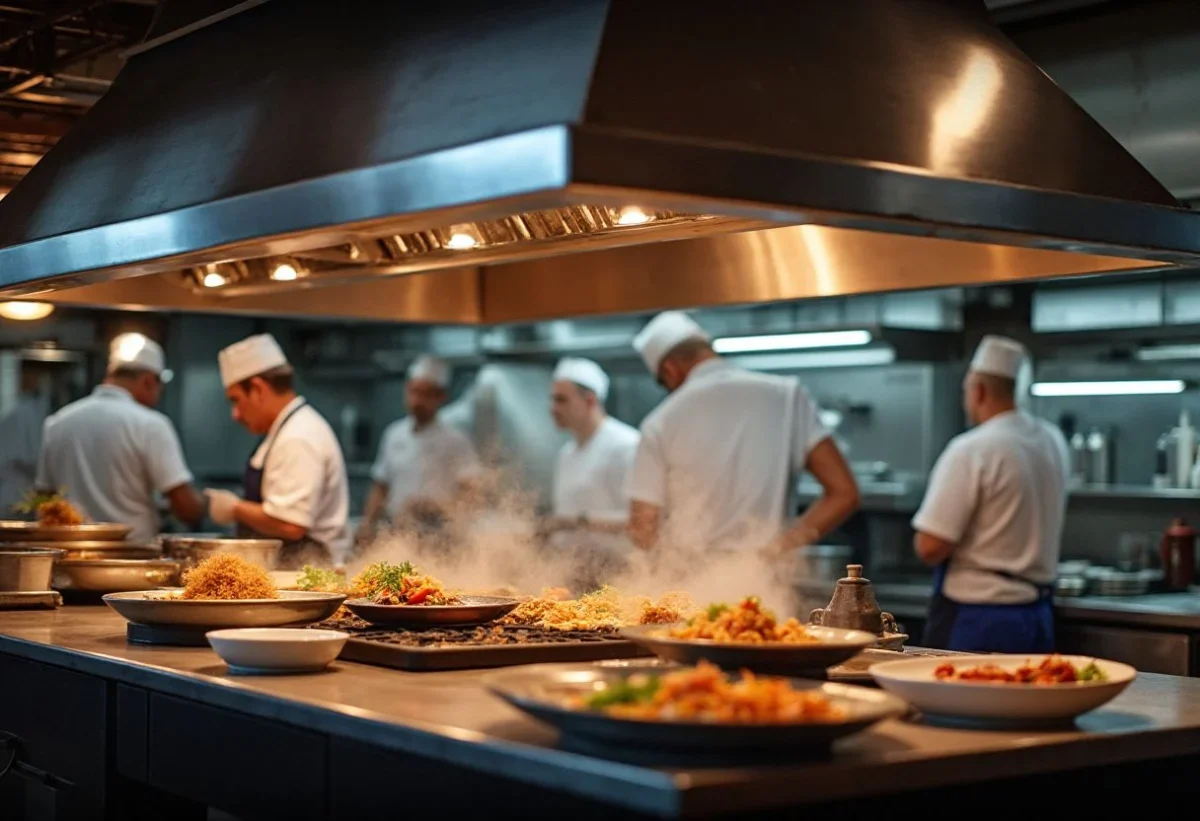
The layout of a professional kitchen is as much an art as it is a science. The choice of equipment must be made carefully, keeping in mind not only efficiency but also safety and hygiene. At the heart of this culinary space, the hood plays a crucial role in ensuring the evacuation of smoke, odors, and vapors. However, a particular innovation is currently capturing the attention of chefs and restaurateurs: the ductless range hood. What distinguishes this type of hood from other models, and why is it proving to be a wise choice for many culinary professionals?
Understanding the operation of a ductless range hood
To fully appreciate the advantages of the ductless range hood, it is essential to understand how it works.
- Unlike traditional hoods, this model does not have an integrated motor. This means it is designed to be paired with a centralized ventilation system that ensures the suction and evacuation of pollutants.
- Its installation therefore requires a connection to an existing exhaust network, making it ideal for kitchens already equipped with a central ventilation system.
- This configuration optimizes space and reduces ambient noise, thus providing a more pleasant working environment.
- With its minimalist design, it fits perfectly into modern and sleek designs while adhering to safety and hygiene standards.
The benefits of a ductless range hood
Choosing a ductless range hood offers several undeniable benefits that are increasingly appealing to restaurant professionals.
Firstly, the absence of a motor in the hood means fewer components that are likely to fail, thus reducing maintenance and repair costs. Additionally, it offers greater flexibility in terms of design and customization, as the hood itself can be designed to harmonize with the rest of the kitchen.
Another major advantage lies in its contribution to a quieter environment. Since the motor is located outside the kitchen, noise is significantly reduced, improving the comfort of employees and customers.
Finally, opting for a ductless range hood is often more economical at the initial purchase, as it requires fewer materials and integrated technology while offering notable energy efficiency.
Installation and maintenance: what you need to know
The installation and maintenance of a ductless range hood require special attention to ensure optimal performance and increased longevity.
- Before installation, it is crucial to check compatibility with your centralized ventilation system. This may require the intervention of a professional to ensure that all connections are properly established.
- Once installed, the hood requires regular maintenance to avoid the accumulation of grease and dust. Filters should be cleaned frequently to maintain effective suction capacity.
- It is also recommended to schedule periodic checks by a qualified technician to verify the condition of the exhaust ducts and the ventilation network as a whole.
By following these steps, you ensure not only the longevity of your equipment but also the safety of your workspace.
Why choose a ductless range hood for your kitchen
In the current context, where energy efficiency and noise reduction are priorities, the ductless range hood presents itself as an ideal solution.
It not only meets ecological criteria by consuming less energy but also contributes to creating a calmer and more productive work environment. For restaurants concerned about their carbon footprint, this model of hood represents a strong commitment to sustainability.
In summary, the ductless range hood is much more than just an alternative to traditional models. It embodies a modern and responsible vision of managing professional kitchens, where innovation and respect for the environment go hand in hand.