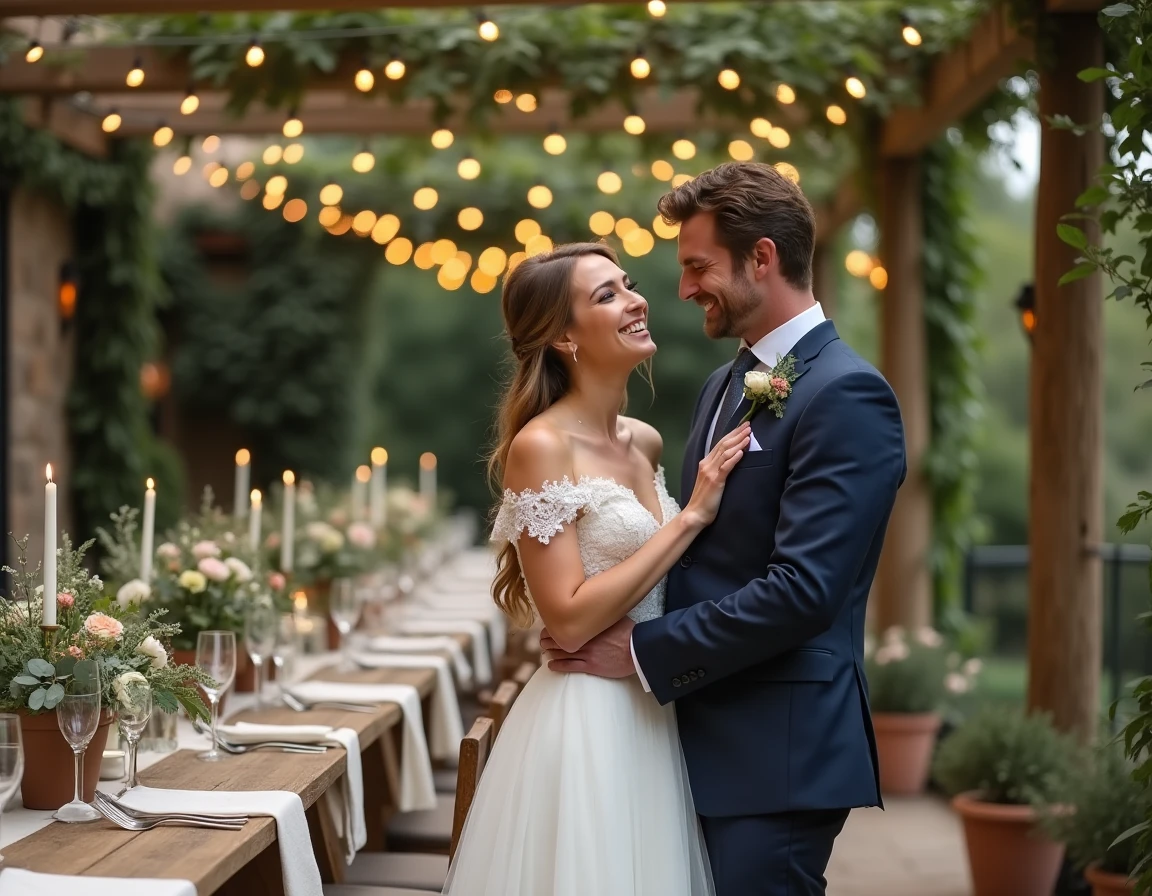
A couple signing a venue contract in October for a wedding in June finds themselves, six months later, managing a weather contingency plan that no one had anticipated. This scenario has been increasingly reported by wedding planners since 2023. Organizing an unforgettable wedding is not just about choosing pretty decorations or a good caterer: on-the-ground constraints can impact the guest experience just as much as original ideas.
Weather contingency plans and insurance: two aspects to secure before the venue

We often start with the reception venue, then think about the backup plan. It’s the opposite that works. Several specialized insurers and wedding planners have noted since 2023-2024 a growing concern among couples regarding weather contingency plans and cancellation insurance, integrated right from the signing of the venue contract.
The increase in extreme weather events, combined with the post-Covid experience, is prompting couples to negotiate these clauses in advance. Specifically, three points should be checked before signing with a venue:
- Is the indoor capacity the same as the outdoor capacity, or do we lose places in case of a backup plan?
- Does the contract include a penalty-free postponement clause in case of an official weather alert?
- Does the weather insurance cover the additional logistical costs (tents, heating, modified transport) or just pure cancellation?
A venue that offers an outdoor option without an equivalent indoor solution poses a real risk. Feedback varies on this point depending on the regions, but asking the question during the first visit avoids unpleasant surprises three weeks before the big day.
You can also explore the Wedding News site to compare venues that detail their backup options in their listings.
Weekday weddings: budget, availability of vendors, and real limits

Wedding platforms have noted a significant increase in weekday weddings, particularly on Thursdays or Fridays. The reason is straightforward: the rising costs of venues and vendors on weekends are pushing couples toward “mid-week” options that more and more venues are now offering.
The savings made on the venue can be substantial. However, the impact on the guest list is often underestimated. A wedding on Thursday could mean that close relatives cannot take time off, families with school-aged children decline, and secondary vendors (makeup, hair) are less available mid-week because they work in salons.
What we gain and what we lose
The real calculation is not just about the venue price. It’s necessary to factor in the actual number of guests present, the cost of additional accommodations for those traveling from afar on a weekday, and the fatigue of guests who have to juggle a workday before the ceremony.
For a small wedding (fewer than fifty people, geographically close), Thursday or Friday works well. For a large reception with guests scattered across the country, Saturday often remains the only realistic option despite the extra cost.
Immersive photo and video setups: what replaces the classic photobooth
Since 2023, entertainment providers have reported a sharp increase in demand for immersive photo and video setups. 360° booths and instant replays on giant screens are now surpassing classic photobooths in wedding orders from some event equipment rental companies.
The principle of the 360° booth: guests step onto a small platform, a camera rotates around them, and the clip is immediately shareable. The visual effect is spectacular and generates a sharing rate on social media that is much higher than static photos.
Technical constraints to anticipate
A 360° booth requires a floor space of at least three meters in diameter, a stable power supply, and a perfectly flat surface. On grass or sloped terrain, setup becomes complicated without a technical floor. One should also plan for a setup time of one to two hours and have an operator on-site.
The instant replay on a giant screen requires a connection between the videographer and a control room, which adds another vendor and an additional budget. The atmosphere these setups create during the evening justifies the cost, but it’s essential to check compatibility with the venue before booking.
Confidentiality clauses with photographers: an underlying trend
Wedding photographers and videographers have noticed a clear increase in requests for confidentiality clauses in contracts since 2024. Specifically, couples are asking for a prohibition on the dissemination of wedding images on the vendor’s social media, deliverables protected by password, and sometimes a strict limitation on photographing children.
This trend is linked to a heightened sensitivity to the protection of personal data and image rights. For a couple, the question arises as early as the first meeting with the photographer: do they agree not to publish the photos on their online portfolio?
How to formulate the request
The clause should be included directly in the service contract, not just discussed verbally. Points to clarify include: duration of the dissemination prohibition, scope (social media, website, trade shows), and the treatment of images of minors. Some photographers accept without difficulty, while others charge an additional fee because wedding photos contribute to their commercial visibility.
Negotiating this clause before signing avoids any misunderstandings on the day of the reception. A vendor who categorically refuses is not necessarily a bad choice, but the discussion should take place early.
Organizing an unforgettable wedding relies less on accumulating decorative ideas and more on mastering the invisible constraints: weather, technical logistics, image protection. It is these operational details, resolved in advance, that allow the couple to truly enjoy their ceremony without managing a crisis on the big day.