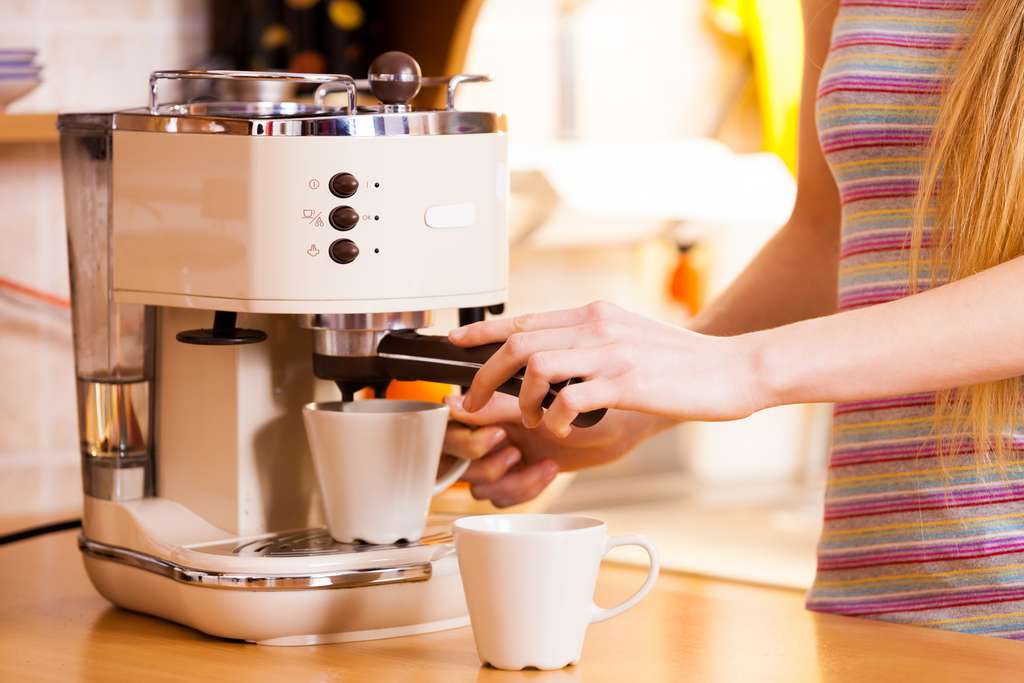
The espresso machine is the appliance you need to buy if you want to enjoy good coffee in your cups. It is a machine that allows you to easily make your coffee at home. This machine is the most advanced of coffee machines and operates essentially based on the principle of high-pressure percolation. Let’s explore how the espresso machine works in the following lines of this article.
It all starts with filling its reservoir
Before you can get good coffee in your cup, you need to supply the espresso machine you will find at https://www.machineaexpresso.fr with water and ground coffee. You will see on the espresso machine a water reservoir and a bean container.
It is in the latter that you will put your coffee beans. Once these two ingredients are in their respective places, you will start the preparation of your espresso by pressing a dedicated button. From that moment, the water and the ground coffee will go through a number of steps before the espresso lands in your cup.
What happens after the button is pressed?
As soon as you press the button, it activates an electrical circuit. This will send an electrical pulse to the water pump. Thus, the water pump will spring into action. It will actually suck up the water you placed in the reservoir. Once sucked, it sends the water to the flow meter. The role of this accessory is to allow the espresso machine to use the exact volume of water that corresponds to the amount of coffee introduced into the machine. This will ensure a successful blend.
The actual brewing
After the work of the flow meter, the water heads to another pump where it will be compressed. Next, the compressed water will move to the solenoid valve before ending up in the boiler. The role of the boiler is to regulate the water temperature using a sensor. At this point, the water reaches a temperature between 93 and 110 °C. Once one of these temperatures is reached, the water enters the compression chamber. It is in this chamber that the coffee grounds are found.
If your machine uses pods or capsules, this is precisely where you will find them. As soon as the water enters this chamber, brewing occurs. The brewing that takes place here is at a minimum pressure of 9 bars. This allows the water to absorb the flavors and aromas present in the coffee grounds. If your machine does not produce espresso with pods or capsules, the water, whose temperature has just been regulated, will directly pass through the ground coffee. Let’s remember that this passage always occurs under the same pressure. After this passage, you obtain the coffee.
The coffee extraction
The freshly brewed coffee will flow along a conduit until it reaches the adequate volume to fill your cup. It is the flow meter that signals to the electrical circuit that the volume has been reached. At that point, the circuit cuts off the water output so that you get a better coffee. Once your cups are filled, the production process is automatically stopped. However, the boiler remains functional to accommodate any new preparation. For now, you can enjoy the coffee you have just obtained.